It is ten past seven on a Tuesday in Waikanae, the morning after a northwesterly came through. The crew is loading the chipper. The phone on the dash has rung six times since they started. The owner has let every one of them go, because he is the one holding the other end of the strop.
One of those callers has a macrocarpa limb lying across a shared driveway with two cars parked behind it. Another would like a feijoa hedge tidied before Christmas. A third wants to know roughly what it costs to take out a gum that has grown taller than the house. From the missed-call list they look identical.
Sorting those three is skilled work. An arborist does it in about ten seconds with one look at the tree, which is why so much of the week goes on driving to have that look. The quote visit is the only way most tree businesses have of seeing the job.
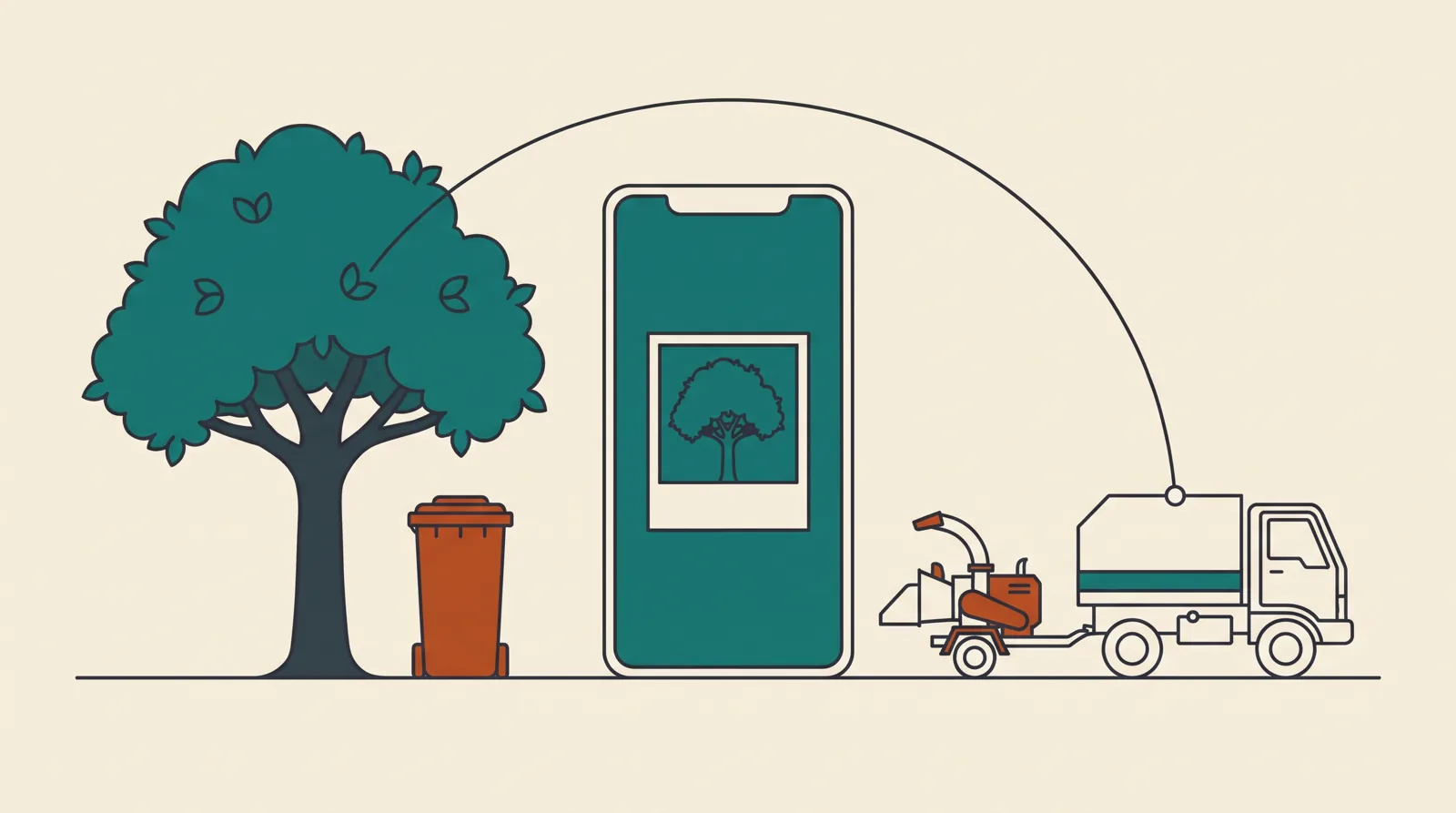
We build AI intake agents that get the look to you sooner. The agent answers the call or replies to the missed one by text, asks for photos, checks they show what you need, sorts the job into the right lane and puts a tidy job card in front of you. Below we cover what the agent can tell from a photo, what stays with the arborist, how to handle price and what to have written down before any of it earns its keep.
Why does tree work lose so much time to quoting?
Because every job is different and the phone description tells you very little. "A big tree out the back" covers everything from a tired silver birch to a forty-year-old pine over the neighbour's garage. So the estimator drives out, has the look, names a figure and finds out on the doorstep whether the homeowner had anything like that figure in mind.
Some of those visits end in a booked job. Some end with a polite "we'll think about it" from someone who was expecting a few hundred dollars. The drive costs the same either way and the person doing the driving is often the most experienced climber in the business.
We wrote about the wider pattern in what missed calls cost NZ trades. Tree work adds a twist of its own: the calls arrive in a rush after bad weather, on the same mornings the crew is flat out.
What does a quote visit cost you?
Work it out from your own figures. Take the estimator's hourly cost, add the vehicle, add the time spent writing the quote up afterwards and multiply by the visits that did not turn into work last month. Most owners we talk to have never run that sum. It is worth an evening with the diary before you spend a dollar on software.
The number matters for a second reason. It tells you the smallest job worth driving to, which becomes one of the rules the agent works from.
Which jobs still need someone on site?
Any job you are going to put a firm price on. A photo will not show you decay inside the trunk, the far side of the tree, what is buried under the lawn, or whether the chipper fits down the right-of-way. Removals near buildings, anything involving rigging and anything close to power lines all need eyes on the ground.
The point of photo intake is to change what the site visit is for. When the homeowner has already seen a price range and said yes to it, the visit becomes a safety and access check with a customer who intends to go ahead.
What can an AI agent tell from a photo of a tree?
More than a phone description. Less than an arborist standing under it. A current vision model can reliably describe what is in the frame: a limb resting on a roof, lines running through the canopy, a fence under the drop zone, a steep bank, a narrow side path. It can sort a job into a rough size band when there is something of known size in the shot.
We treat that as triage. The model is describing and sorting. We would not have it diagnose tree health, name the method, or commit to a height in metres from a photo taken on a phone. It is the same split we used when we built photo assessment for insurance claims: the system handles the clear cases quickly and passes anything uncertain to a person, with the reason attached.
Which photos should the agent ask for?
Four, in a fixed order. The whole tree from far enough back to see the top. The base of the trunk. Whatever sits underneath or beside it, such as a roof, a fence, a shed or a driveway. The path a crew would take to reach it from the road.
The agent also asks three questions the photos cannot answer. Is the tree on your property or the neighbour's? Is anything touching or close to power lines? Do you know whether the tree is protected? Homeowners often do not know the last one. "Not sure" is a useful answer to have on the job card.
How does the agent handle scale?
By asking for a wheelie bin. A tree photographed from the far fence and a shrub photographed from a metre away can fill the frame in the same way. A standard 240-litre council bin stands a little over a metre tall, nearly every house has one and with it parked beside the trunk both the model and the arborist can judge the size.
If the first photos come back without anything for scale, or too dark to read, the agent says so and asks again in plain words. That one follow-up text does a lot of the work. People are happy to take a second photo when they have been told why.
How should the agent handle price?
It sends a range from your rate card, labelled as an estimate and says that the firm price comes after a site check. Whether it sends that range on its own or waits for you to tap approve is your call. We suggest starting with approval on every one.
Starting that way costs you perhaps a minute a job. You see the photos, the lane the agent chose and the range it proposes, then approve it or change it. After a few weeks you will know which job types it gets right every time, such as stump grinding or small hedge work and those can go out without waiting for you.
What is the difference between an estimate and a quote?
In New Zealand a quote is an offer to do the work for a set price and once the customer accepts it you are generally held to it. An estimate is your best judgement of the likely cost. The agent only ever sends estimates and the wording says so each time: a range, what it covers and a line that the price is confirmed on site.
That wording protects the customer as much as the business. They know what the number means and what could move it.
What happens when the range is more than the homeowner expected?
The agent thanks them, leaves the door open and closes the conversation politely. Some people will come back in a month. Some were always going to borrow a chainsaw. In both cases the answer arrived by text within the hour, which is a better experience for the homeowner than waiting a week for a visit and a figure.
When the homeowner says yes, the agent offers site visit times from your calendar and books one. The estimator arrives knowing the tree, the access and the budget.
What happens on a storm morning?
The agent answers every call and sorts by hazard first. Anything involving a tree on a building, a blocked road or driveway with people stuck behind it, or lines down goes to the top and reaches a person straight away. Routine pruning enquiries are told honestly that the crew is on storm work and given a realistic day for a reply.
This is the same job the agent does in leak triage for roofers on a wet week. The volume is beyond what one person can answer and the order the jobs are done in matters more than usual.
When does the agent hand straight to a person?
Whenever safety is in question. A tree or limb on a house with people inside, anything touching or near power lines, a tree that is moving or cracking, or a caller who sounds frightened. The agent tells the caller to keep well clear, to ring 111 if anyone is in danger and to treat any fallen line as live and call their lines company. Then it puts the job through to the on-call number.
Write that list before the build and keep it short. How the handover feels to the caller matters. We have covered it in the escalation experience.
What about power lines and protected trees?
Both get flagged and neither gets a price by text. Tree work near lines has its own rules, set out in WorkSafe's guidance on maintaining trees around power lines and the minimum approach distances in NZECP 34. If lines appear in the photos or the homeowner mentions them, the job goes to the site-visit lane with a note.
Protected trees vary by council. Many district plans keep a schedule of notable trees and removing or heavily pruning one can need resource consent. The agent asks the question, records the answer and leaves the checking to you. It does not tell a homeowner their tree is fine to remove.
What do you need in place before this works?
A rate card with ranges, a minimum job value, your hazard list and somewhere for the job to go. With those written down the build is a few weeks of work. Without them the agent has nothing to quote from and nowhere to send what it collects.
The rate card is the part most businesses carry in one person's head. Getting it onto a page, by job type and size band, is useful on its own. It is also what lets a second person in the business give the same answer you would.
Which systems does the agent connect to?
Whatever you run jobs through today. ServiceM8, Fergus and simPRO all offer ways to create jobs from outside the app and the photos, answers and proposed range attach to the job so the crew can see the original request on the day. If you run the business from a diary and a phone, a text with the job summary and a photo link is a perfectly good place to begin.
How does this sit with the Privacy Act 2020?
Lightly, if you set it up properly. Photos of someone's back yard alongside their name, address and phone number are personal information. The Privacy Act 2020 expects you to tell people what you are collecting and why (principle 3), keep it secure and hold it no longer than you need it (principle 9).
In practice that is one line in the first text saying the photos are used to prepare an estimate, a set period after which photos from jobs that did not go ahead are deleted and a check that whichever AI provider processes the images is not keeping them to train its models.
Where do WorkSafe and NZ Arb fit?
WorkSafe publishes the health and safety guidance for arboriculture and nothing about photo intake changes your obligations under it. The site assessment and the job safety plan are still done by a competent person at the tree. If you are an NZ Arb Approved Contractor, the agent can say so in its first message, which helps a homeowner choosing between three numbers on a search page.
Practical Takeaway
Start with the photos and leave the AI for later. This week, change your voicemail and your missed-call text to ask for four photos with the wheelie bin beside the trunk. Look at them yourself between jobs. You will find out quickly how many visits a photo could have saved. You will also have real examples to build the rules from.
Then write down the three things the agent needs. Your rate card as ranges by job type and size. The smallest job you will drive to. The list of situations that go straight to a person.
Once those exist, the build is small: a line that answers every call, a text flow that collects and checks the photos, a job card with a proposed range and an approve button. It is the same shape we built CallCover around for NZ trades and the same intake pattern as site quotes for fencing contractors. If you would like to talk through how it would fit your business, get in touch.
Frequently asked questions
- Can AI give a tree removal quote from a photo?
- It can give an estimate range, which is different from a quote. An AI intake agent collects photos, sorts the job by size and hazard and proposes a range from your rate card. A firm quote still needs an arborist on site to check access, tree condition and anything the photos cannot show.
- How accurate is AI at judging tree size from a photo?
- Accurate enough to sort jobs into rough size bands when there is something of known size in the shot, such as a 240-litre wheelie bin beside the trunk. It is not a measuring tool. We would not rely on it for a height in metres and the arborist reviews the photos before any range is sent.
- What happens if a caller reports a tree on power lines?
- The agent does not send a price. It tells the caller to keep well clear, treat any fallen line as live, ring 111 if anyone is in danger and contact their lines company. The job is flagged and passed straight to a person at the business.
- Does the AI replace the site visit?
- No. It changes what the visit is for. The homeowner has already seen a price range and agreed to it, so the visit becomes a safety and access check before a firm quote, with a customer who intends to go ahead.
- Does photo intake work with ServiceM8 or Fergus?
- Yes. ServiceM8, Fergus and simPRO all allow jobs to be created from outside the app, so the photos, the homeowner's answers and the proposed range can attach to the job card. A plain text summary to the owner's phone also works as a starting point.