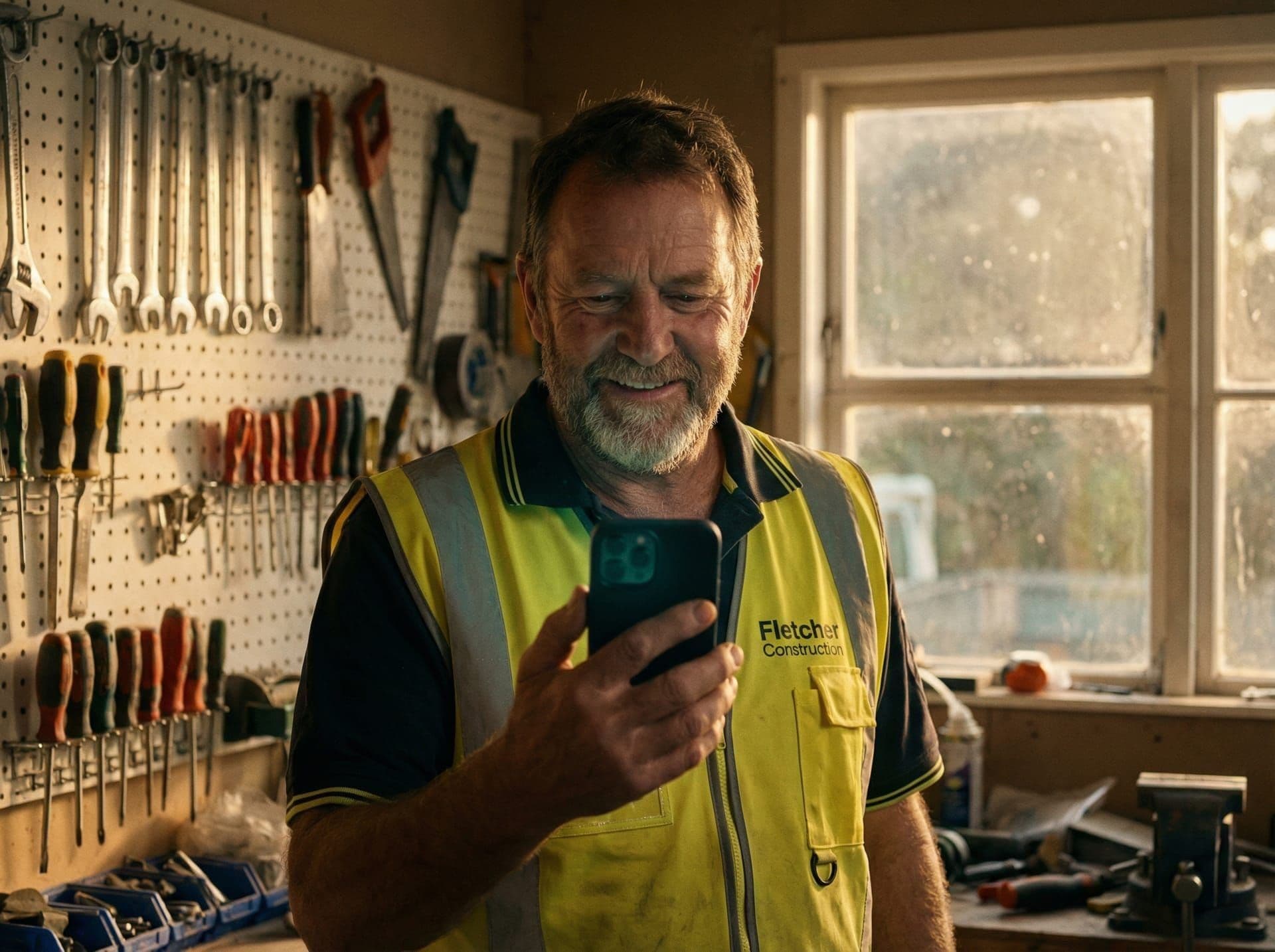
Missed calls cost tradespeople thousands every year. The average tradesperson misses 40% of inbound calls during working hours. That is not a minor inconvenience. It is a structural revenue leak that compounds over time.
The problem is simple: when you are on the tools, your phone is the last thing you can reach for. But the solution has shifted dramatically in the last eighteen months, thanks to advances in voice AI.
Why do tradespeople miss so many calls?
Plumbers under a house. Electricians up a ladder. Builders running a saw. Roofers three storeys up. The phone rings, goes to voicemail, and the customer calls the next number on Google.
The maths is straightforward. If a plumber charges $150 per callout and misses three calls a day, that is $450 in lost revenue daily. Over a working year, that figure exceeds $100,000.
Most tradespeople know this. The traditional solutions have been a receptionist (expensive, limited to business hours), a call centre (impersonal, often offshore), or voicemail (which customers increasingly ignore). None of these solve the core problem: a real-time, natural conversation with the caller at the moment they need help.
How do AI voice agents actually work?
AI voice agents answer the phone like a human receptionist. They greet the caller, ask what they need, capture their details, and either book them in or escalate to the tradesperson directly.
The technology uses large language models fine-tuned for phone conversations. Modern voice AI handles accents, background noise, and the kind of shorthand real customers use. "My dunny's blocked" is a perfectly valid job description, and the system understands it.
The key difference from older Interactive Voice Response (IVR) systems is conversational ability. IVR systems force callers through rigid menus. Voice AI has a genuine conversation, asks clarifying questions, and adapts to what the caller says. The experience for the customer is closer to speaking with a knowledgeable receptionist than navigating a phone tree.
What does this look like in practice?
A typical interaction runs like this:
- Customer calls the tradesperson's existing number
- AI agent answers within two rings, identifies the business
- Caller describes what they need ("hot water cylinder is leaking")
- Agent asks relevant questions (address, urgency, access details)
- Agent confirms the details and advises on next steps
- Tradesperson receives a summary with full context
The tradesperson calls back when they are ready, armed with everything they need to quote or schedule the job. No phone tag. No lost context. No missed revenue.
What are the costs compared to a receptionist?
A full-time receptionist in New Zealand costs $45,000-$55,000 per year before ACC, KiwiSaver, and leave entitlements. That is viable for larger operations but prohibitive for a sole trader or small team.
AI voice agents operate at a fraction of that cost, typically $200-$500 per month depending on call volume. They work 24/7, never call in sick, and scale instantly during busy periods. For a trades business doing $500,000-$2,000,000 in annual revenue, the return on investment is measured in weeks, not months.
What about the human element?
This is the question that matters most. Tradespeople build their businesses on personal relationships. Will customers accept speaking to an AI?
The evidence so far suggests yes, provided the AI is competent. Callers care about three things: someone answers, their problem is understood, and they get a clear next step. When those three conditions are met, most callers do not distinguish between a human receptionist and a well-built AI agent. Some do not even realise they are speaking with AI.
The trades businesses seeing the best results are those that position the AI as an extension of their service, not a replacement for it. The AI handles the intake; the tradesperson handles the relationship.
FAQ
How long does it take to set up an AI voice agent for a trades business?
Most implementations are operational within 48 hours. The setup involves configuring the agent with business-specific information (services offered, service area, pricing guidance) and redirecting calls from the existing phone number.
Can AI voice agents handle emergency calls differently from routine enquiries?
Yes. Agents can be configured to escalate urgent calls immediately via text or direct transfer, while routing standard enquiries through the normal booking process.
Do AI voice agents work with New Zealand phone numbers and accents?
Modern voice AI handles New Zealand English well, including Maori place names and local terminology. The systems work with standard NZ landline and mobile numbers with no changes to the existing phone setup.